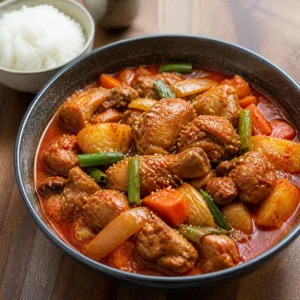
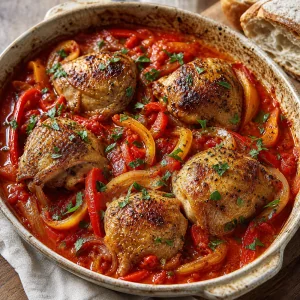
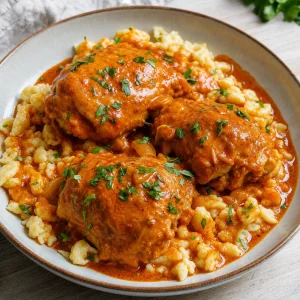
Classic Filipino Chicken Adobo with Garlic and Soy Sauce
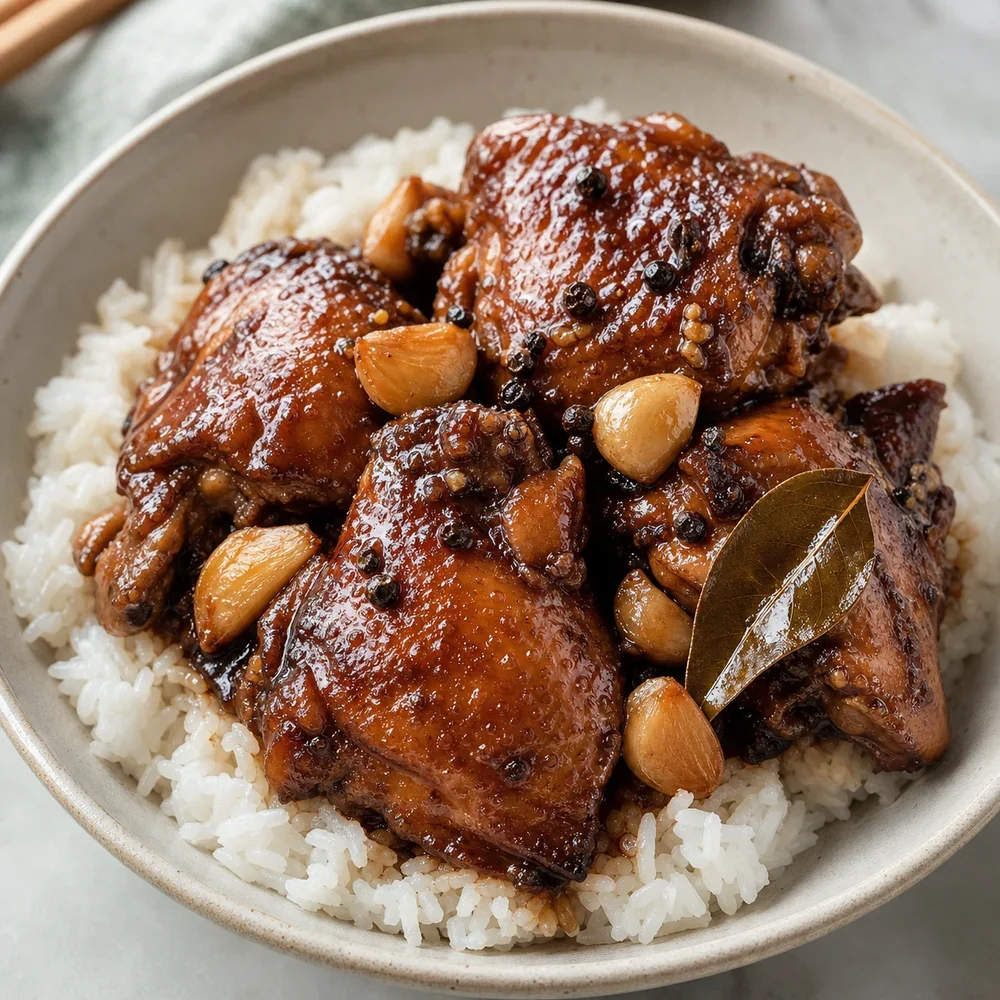

If there is one dish that defines the heart of Filipino home cooking, it is Chicken Adobo. This isn't just a meal; it's a sensory experience where the sharp tang of vinegar meets the deep saltiness of soy sauce, all mellowed out by a generous amount of toasted garlic. Every household has their own secret version, but the soul remains the same: a slow-braised chicken that becomes incredibly tender, coated in a sauce so flavorful you'll want to drizzle it over every grain of rice on your plate.
What I love most about this recipe is its beautiful simplicity and how the flavors deepen over time. The vinegar acts as a natural tenderizer, making the meat succulent while creating a preservative quality that actually makes the leftovers taste even better the next day. As the sauce reduces in the pan, it transforms from a thin broth into a rich, glossy glaze that clings to the meat. It’s comfort food at its finest—rustic, unpretentious, and utterly addictive.
Nutrition (per serving)
Directions
-
1
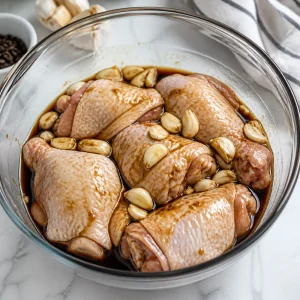
In a large bowl, combine the chicken thighs, soy sauce, and half of the smashed garlic. Let it marinate for at least 20 minutes, or up to 2 hours in the fridge for deeper flavor.
-
2
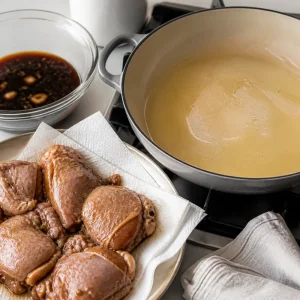
Heat the oil in a large skillet or Dutch oven over medium-high heat. Remove the chicken from the marinade (reserve the liquid) and pat the skin dry with paper towels.
-
3

Place the chicken skin-side down in the hot skillet. Sear until the skin is golden brown and crispy, about 5 minutes. Flip and sear the other side for 2 minutes. Remove chicken and set aside.
-
4
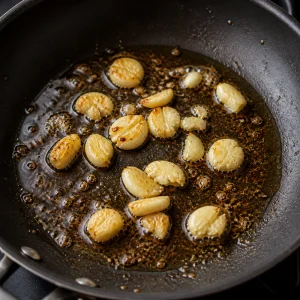
In the same pan, add the remaining garlic and sauté for 1 minute until fragrant but not burnt.
-
5
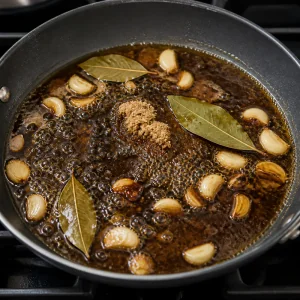
Pour in the reserved marinade, vinegar, water, whole peppercorns, bay leaves, and brown sugar. Bring the mixture to a boil.
-
6
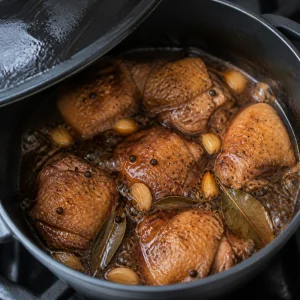
Add the chicken back into the pan. Reduce the heat to low, cover, and simmer for about 25-30 minutes until the chicken is cooked through and tender.
-
7
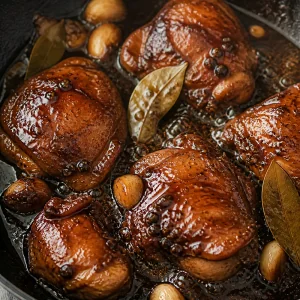
Remove the lid and increase the heat to medium-high. Continue to simmer for another 10-15 minutes, turning the chicken occasionally, until the sauce reduces and becomes a thick, glossy glaze.
-
8
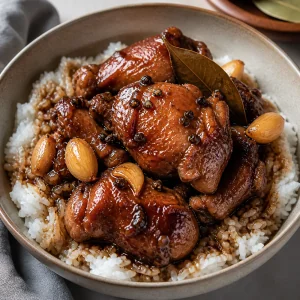
Serve hot over steamed white jasmine rice, spooning plenty of the sauce over the top.
Ingredients
- Chicken thighs, bone-in and skin-on:2 lb
- Soy sauce:½ cup
- White vinegar or cane vinegar:⅓ cup
- Garlic cloves, smashed and peeled:8 pieces
- Whole black peppercorns:1 tsp
- Dried bay leaves:3 pieces
- Brown sugar:1 tbsp
- Canola or vegetable oil:2 tbsp
- Water:½ cup
Tips & Notes
- Using bone-in thighs is essential for the best flavor and juicy meat, as breasts can dry out during the braising process.
- Don't stir the sauce immediately after adding the vinegar; let it boil for a minute to allow the raw 'harshness' of the vinegar to cook off.
- For an extra touch, fry some minced garlic in oil until golden and sprinkle it over the dish before serving.