Homemade Vegetarian Kimchi with Gochugaru and Sesame
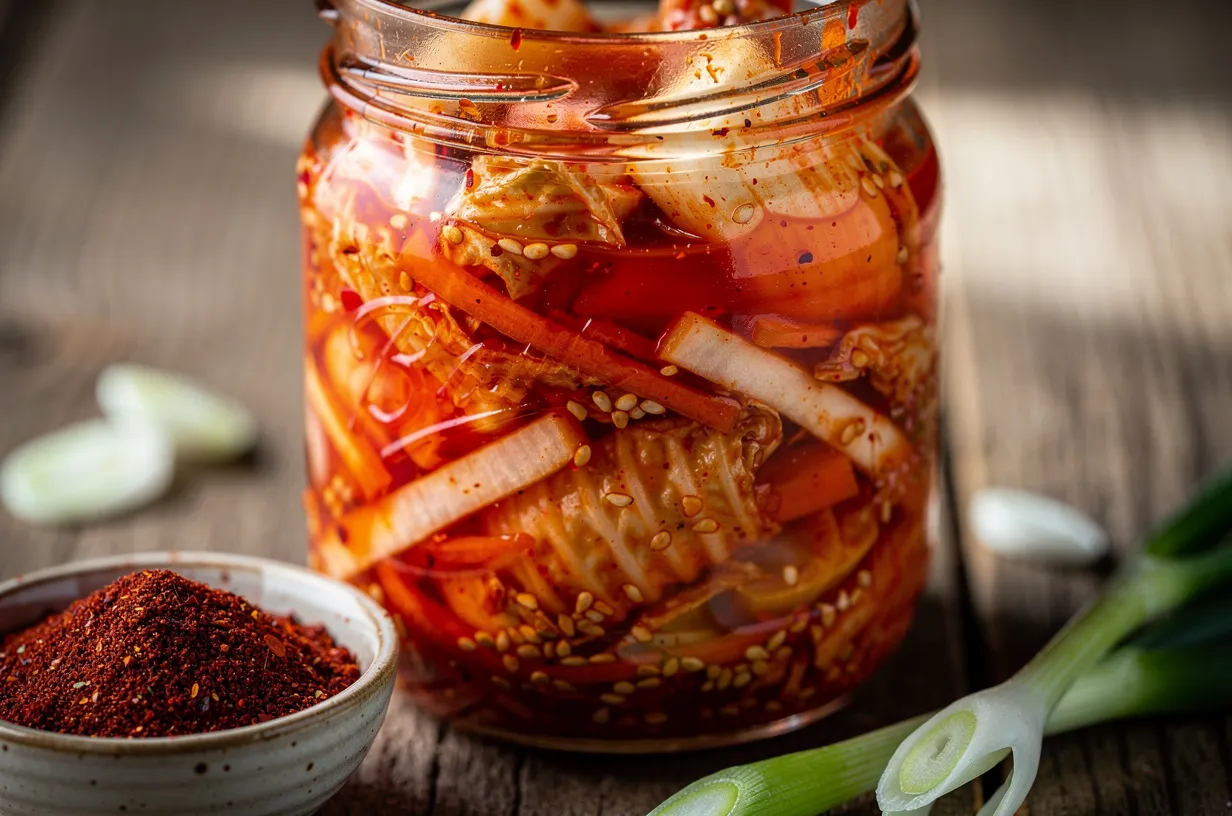

Vegetarian Kimchi
Tangy, spicy vegetarian kimchi fermented with gochugaru and miso—bright, crunchy, addictive.
I adore kimchi for its bold, tangy punch and the way it turns ordinary meals into something memorable. This vegetarian version keeps all the snap and spice of traditional kimchi but swaps fishy ingredients for miso and soy to build deep umami—perfect for anyone who avoids seafood but still wants authentic Korean flavors.
Making kimchi is more a ritual than a recipe: a little time, salt, and hands-on mixing give you crunchy, fermented magic. The process is simple, and the payoff is huge—serve it as a side, stir it into fried rice, or let it transform soups and stews.
Nutrition (per serving)
Directions
-
1
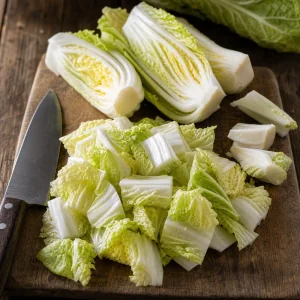
Quarter the napa cabbages lengthwise and remove any tough cores. Cut each quarter into 2-inch wide pieces.
-
2
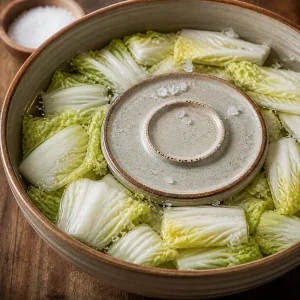
Place cabbage pieces in a large bowl and sprinkle with the coarse sea salt, working the salt between layers. Add 6–8 cups of cold water to cover. Press down so cabbage is submerged and let sit 2–3 hours, turning every 30 minutes until leaves have softened.
-
3
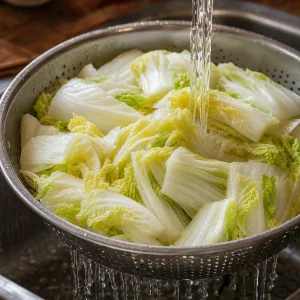
Rinse the cabbage thoroughly 2–3 times under cold running water to remove excess salt. Taste a leaf—should be lightly seasoned but not overwhelmingly salty. Drain well and set aside in a large mixing bowl.
-
4
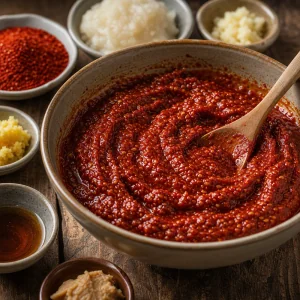
Make the kimchi paste: in a blender or bowl combine gochugaru, miso, soy sauce, grated pear, minced garlic, grated ginger, and sugar. Blend or mix until a thick, spreadable paste forms. Stir in sesame oil.
-
5

Add julienned daikon, carrot, and scallions to the bowl with the drained cabbage. Wearing food-safe gloves, massage the paste into the vegetables, working it between leaves and coating everything evenly. Taste and adjust seasoning—add a little more gochugaru for heat or a splash of soy for saltiness.
-
6
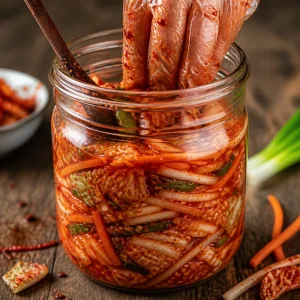
Pack the kimchi tightly into a clean quart-sized jar or two smaller jars, pressing down to remove air pockets and leaving about 1 inch of headspace. Wipe the rim clean and seal with a lid.
-
7
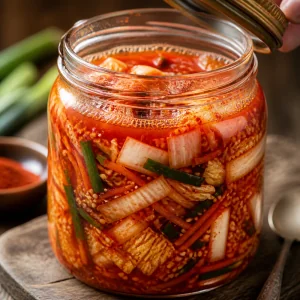
Ferment at cool room temperature (around 65–70°F) out of direct sunlight: leave the jar on the counter for 24–48 hours to start fermenting. Check daily—open the jar to release gas and taste. When it has a pleasant tang (after 2–3 days), move to the refrigerator.
-
8
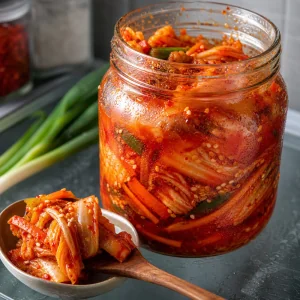
Refrigerate at least 1 week before eating for deeper flavor. Kimchi continues to develop in the fridge and will keep for several weeks to months; flavor intensifies over time.
Ingredients
- Napa cabbage:2 pieces
- Coarse sea salt (for salting):1/2 cup
- Water (for brining/rinsing):8 cups
- Korean red pepper flakes (gochugaru):1/3 cup
- White miso paste:3 tbsp
- Soy sauce or tamari:2 tbsp
- Garlic, minced:8 cloves
- Fresh ginger, grated:2 tbsp
- Sugar (or rice syrup):1 tbsp
- Korean pear or Bosc pear, grated:1 piece
- Daikon radish, julienned:8 oz
- Carrot, julienned:1 piece
- Scallions, trimmed and cut into 1-inch pieces:6 pieces
- Sesame oil:1 tbsp
- Toasted sesame seeds:1 tbsp
Tips & Notes
- Use gloves when mixing the paste—gochugaru stains and the spice can linger on your skin.
- If you can’t find Korean pear, a sweet apple or a little apple juice works to add natural sugar for fermentation.
- Keep an eye on fermentation temperature: warmer rooms speed it up, cooler rooms slow it down.
- Press the vegetables down each day to keep them submerged in their brine and reduce mold risk.
- Adjust heat by increasing or decreasing gochugaru; for milder kimchi, use 2 tbsp and for hotter, up to 1/2 cup.